Why Do Cats Scratch Furniture and How to Stop It (Without Yelling)
Published June 17, 2026 • Pet Care
why do cats scratch furniture and how to stop cat scratching solutions stop cat scratching couch best cat scratching post cat behavior tips
As an Amazon Associate, we earn from qualifying purchases. We may also earn commissions from Chewy and Petco. This does not affect our recommendations.
You walk into the living room, and there it is—another fresh set of claw marks on your brand-new sofa. You sigh, wondering if your cat is secretly trying to redecorate. You’re not alone. Nearly 70% of cat owners report furniture scratching as their top behavior complaint. But here’s the truth: your cat isn’t being bad. They’re being a cat.
The good news is you don’t have to choose between your furniture and your feline friend. **Scratching is a natural, healthy behavior** that you can redirect without punishment. In this guide, you’ll learn exactly *why* your cat scratches and how to stop it using simple, proven strategies that actually work.
| Best Overall | Budget Pick | Premium Pick |
|---|
SmartCat Ultimate Scratching Post
⭐4.7
32-inch sisal post, stable base |
PetFusion Jumbo Cat Scratcher
⭐4.5
Under $25, cardboard refillable |
Molly and Friend Lotus Cat Tree
⭐4.8
Multi-level, natural sisal rope |
## Why Do Cats Scratch Furniture? The Real Reasons
Before you can solve the problem, you need to understand the *why*. Cats scratch for four main reasons, and your sofa is just a convenient target.
**First, scratching is how cats mark territory.** Your cat’s paws contain scent glands. When they dig their claws into your couch, they’re leaving a visual and chemical message: “This is mine.” It’s not aggression—it’s a deeply ingrained survival instinct. Think of it as your cat leaving a signature on their favorite spot.
**Second, scratching helps maintain claw health.** Just like you trim your nails, cats need to shed the outer sheath of their claws. Scratching on a rough surface pulls off that dead layer, keeping their weapons sharp and healthy. Your sofa upholstery happens to be the perfect texture for this job.
**Third, scratching is a form of exercise and stretching.** Watch your cat scratch: they stretch their entire body, from front paws to back legs. It feels good. It’s a full-body stretch that keeps muscles flexible and joints lubricated. For indoor cats, it’s one of the few ways they can get a good stretch.
**Fourth, scratching relieves stress and boredom.** Cats scratch when they’re excited, anxious, or just looking for something to do. If your cat is scratching more than usual, it might be a sign they’re under-stimulated or stressed. This connects directly to their emotional well-being—something we explore in our article on why do cats knead blankets, which explains how repetitive paw movements are tied to comfort and security.
**Bottom line:** Scratching is not revenge. It’s communication, grooming, and exercise rolled into one. Once you accept that, you can work *with* your cat instead of against them.
## Tip 1: Make the Right Scratching Surfaces Irresistible
The simplest way to stop your cat from scratching your couch is to give them something better. **You need to make the alternative more appealing than your sofa.** This is where product selection and placement matter immensely.
Cats have preferences for scratching surfaces. Some love vertical sisal rope, others prefer horizontal cardboard, and a few are drawn to carpet-like textures. **The key is to match your cat’s preferred scratching style.** Watch how they scratch your furniture: Are they stretching upward on the arm of the couch (vertical)? Or are they digging into the seat cushion (horizontal)?
For vertical scratchers, the **SmartCat Ultimate Scratching Post** is a top choice. At 32 inches tall, it’s sturdy enough for a full stretch and won’t tip over when your cat really goes to town. It’s wrapped in natural sisal rope, which most cats find irresistible.
For horizontal scratchers, the **PetFusion Jumbo Cat Scratcher** is a budget-friendly winner. It’s made of corrugated cardboard, which mimics the texture of couch cushions. Plus, you can flip it over for double the use, and the cardboard is recyclable when you’re done.
**Placement is everything.** Put the scratcher right next to the spot your cat targets on the couch. If they scratch the left arm of the sofa, place the post directly to the left of that arm. After a week or so, you can gradually move it a few inches per day toward a more convenient location. This slow migration works because your cat has already formed a positive association with the post.
**Make the post even more enticing.** Rub a little catnip into the sisal fibers. Dangle a toy from the top. Some cats respond to pheromone sprays like Feliway, which can be applied to the scratching post to signal “this is a safe place to scratch.” For more on how scent and texture influence cat behavior, check out our guide on why do cats scratch furniture and how to stop it without losing your mind, which dives deeper into feline psychology.
**Pro tip:** If your cat ignores the post, try a different material. Some cats hate sisal but love carpet. Others prefer the smooth feel of wood. Don’t be afraid to experiment with a few options.
## Tip 2: Protect Your Furniture with Deterrents (Not Punishment)
While you’re training your cat to use their new scratcher, you need to make your couch less appealing. **Never yell, hit, or spray your cat with water.** Punishment only makes them afraid of you and stressed, which can actually *increase* scratching. Instead, use gentle, humane deterrents.
**Double-sided tape is your secret weapon.** Cats hate the sticky feeling on their paws. Products like Sticky Paws for Furniture come in wide rolls that you can apply directly to couch arms and cushions. Place a strip where your cat normally scratches. After a few tries, they’ll avoid that spot entirely. Once they’ve formed the habit of using their post, you can remove the tape.
**Aluminum foil is another cheap deterrent.** Many cats dislike the crinkly sound and texture. Drape a sheet of foil over the scratched area for a few days. Your cat will quickly learn that the couch is no fun to scratch.
**Motion-activated deterrents work well for stubborn cats.** The SSSCAT Spray is a can of compressed air with a motion sensor. Place it near the couch. When your cat approaches and starts to scratch, it releases a harmless puff of air that startles them. After a few times, they’ll associate the couch with an unpleasant surprise and avoid it altogether.
**Cover your furniture temporarily.** For the first few weeks, use a couch cover or a fleece blanket to protect the upholstery. This removes the tactile reward of scratching. Once your cat is consistently using their post, you can remove the cover.
**One more thing:** Trim your cat’s nails regularly. Short nails cause less damage and are less satisfying to scratch with. If you’re nervous about clipping, use a nail grinder like the Dremel PawControl. It’s quieter and safer than clippers for most cats. For more tips on maintaining a clean, scratch-free home, read our article on how to keep a clean home with shedding dogs: practical daily routine—many of the cleaning and furniture protection strategies apply to cats too.
**Remember:** The goal is to make the couch *boring* and the post *exciting*. Deterrents are a temporary bridge, not a permanent solution.
## Tip 3: Enrich Your Cat’s Environment to Reduce Stress Scratching
Stress is a major driver of destructive scratching. If your cat is bored, lonely, or anxious, they’ll scratch more. **A happy, stimulated cat is less likely to destroy your furniture.**
**Provide vertical space.** Cats are natural climbers. A cat tree gives them a place to perch, observe, and scratch. The **Molly and Friend Lotus Cat Tree** is a premium option that combines multiple scratching surfaces with cozy perches. It’s wrapped in natural sisal and has a sturdy base that won’t wobble.
**Rotate toys to prevent boredom.** Cats get bored with the same toys. Keep a stash of 10-15 toys and rotate them every few days. Interactive toys like wand feathers or laser pointers provide exercise and bonding time. Aim for two 15-minute play sessions per day. A tired cat is a well-behaved cat.
**Use puzzle feeders.** Scratching can be a displacement behavior when a cat is hungry or frustrated. Puzzle feeders, like the Nina Ottosson by Outward Hound line, make your cat work for their food. This mental stimulation reduces stress and channels their energy into problem-solving instead of scratching.
**Create a calming environment.** Feliway diffusers release synthetic pheromones that mimic the “happy” scent cats leave when they rub their face on things. These can reduce overall anxiety and scratching. Place one in the room where your cat spends the most time.
**Consider a second cat.** If you’re away from home often, a feline companion can provide social stimulation and reduce loneliness. However, this is a big decision—not all cats are social, and introductions must be slow and careful.
**Watch for changes in scratching patterns.** If your cat suddenly starts scratching furniture after years of using their post, it could signal a health issue like arthritis or a urinary tract infection. Always consult your vet if behavior changes are sudden or severe.
## Best Products to Stop Cat Scratching
Here are our top picks to help you redirect scratching and protect your furniture.
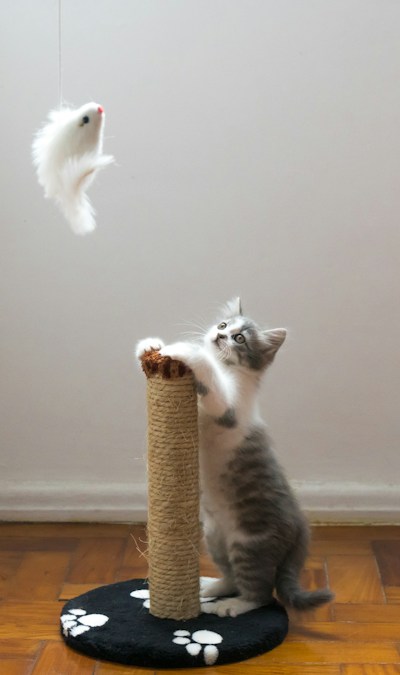
SmartCat Ultimate Scratching Post
★★★★★ (12,450 reviews)
$34.99
Amazon →

PetFusion Jumbo Cat Scratcher
★★★★☆ (8,200 reviews)
$22.99
Chewy →
Molly and Friend Lotus Cat Tree
★★★★☆ (3,800 reviews)
$89.99
Petco →
## FAQ: Your Cat Scratching Questions Answered
Is it normal for my cat to scratch the couch?
Yes, it is completely normal. Scratching is an innate feline behavior used for marking territory, maintaining claw health, stretching, and relieving stress. The problem is not the scratching itself—it's the target. With proper training and the right tools, you can redirect this behavior to appropriate surfaces without punishing your cat.
Will declawing stop my cat from scratching?
No, and we strongly advise against declawing. Declawing is not a simple nail trim—it involves amputating the last bone of each toe. This is painful and can lead to long-term physical and behavioral issues, including chronic pain, arthritis, and litter box avoidance. Instead, use humane alternatives like scratching posts, nail caps (Soft Paws), and regular nail trims. Declawing is banned in many countries for good reason.
Does spraying my cat with water stop scratching?
No, it's not effective and can harm your relationship with your cat. Spraying water may temporarily stop the behavior, but it teaches your cat to be afraid of you and to scratch when
📩 Free Pet Care Cheat Sheet
Get our Pet Hair Removal Cheat Sheet + weekly tips delivered to your inbox. Free instant download.
📥 Get Free Guide
No spam. Unsubscribe anytime.
🛒 Our Printable Pet Planners — Instant Download
Print at home and start organizing your pet's life today
Cat Lover Bundle
$9.99
7-page printable bundle: behavior log, feeding tracker, litter box schedule & enrichment ideas
Get Printable
📋 Free Pet Care Checklist
Download our printable Pet Emergency & First Aid Handbook — 12 pages of life-saving steps every pet owner should know. Instant PDF download.
Get Your Free Copy →
🐶 Going Away? Find Trusted Pet Care
Find 5-star rated, background-checked pet sitters and dog walkers near you. Every booking includes 24/7 support and pet insurance coverage.
Find a Pet Sitter on Rover →
🐾 Enjoyed This Article?
Share with a fellow pet parent, or check out more tips on our homepage!