🥵 How to Keep Pets Cool in Summer 2026: 15 Vet-Reviewed Tips to Prevent Heatstroke
Summer is fun—beach trips, backyard BBQs, long evening walks. But for our pets, hot weather can be dangerous. Here's how to keep them safe when the temperature rises.
📋 Table of Contents
⚠️ Signs of Heatstroke in Pets
- Heavy panting that doesn't stop
- Bright red or blue gums
- Vomiting or diarrhea
- Confusion or collapsing
- Body temperature over 104°F (40°C)
🧊 15 Vet-Recommended Cooling Tips
1 Always Provide Fresh Water
Dehydration happens fast in summer. Place water bowls in multiple rooms. Add ice cubes to keep it cool longer. Consider a pet water fountain to encourage drinking.
2 Never Leave Pets in Parked Cars
A parked car heats up by 20°F in just 10 minutes. On an 85°F day, the inside reaches 120°F in minutes. It's illegal in many states—and deadly for pets.
3 Walk During Cooler Hours
Walk early morning (before 9 AM) or after sunset. Asphalt can burn paw pads—if you can't hold your hand on the pavement for 7 seconds, it's too hot for paws.
4 Provide Shade Outdoors
If your pet spends time in the yard, ensure there's always a shaded area. A cooling mat or elevated bed helps too—check our cooling product guide.
5 Use Cooling Mats or Vests
Cooling mats with gel or water activation can lower body temp by 10-15°F. Place them in your pet's favorite resting spot. Shop vet-recommended cooling mats on Amazon →
6 Give Frozen Treats
Stuff a KONG with wet food or peanut butter, freeze it, and give it on hot days. For dogs, frozen fruit (blueberries, watermelon without seeds) makes a healthy summer snack.
7 Avoid Intense Exercise on Hot Days
Skip the run or frisbee session when it's over 80°F. Brachycephalic breeds (pugs, bulldogs) are especially at risk—keep them indoors with A/C when possible.
8 Groom Regularly (But Don't Shave)
A well-groomed coat actually insulates against heat. Shaving double-coated breeds (Huskies, Golden Retrievers) can cause sunburn and reduce their natural cooling. Use the right brush →
9 Set Up a Kiddie Pool
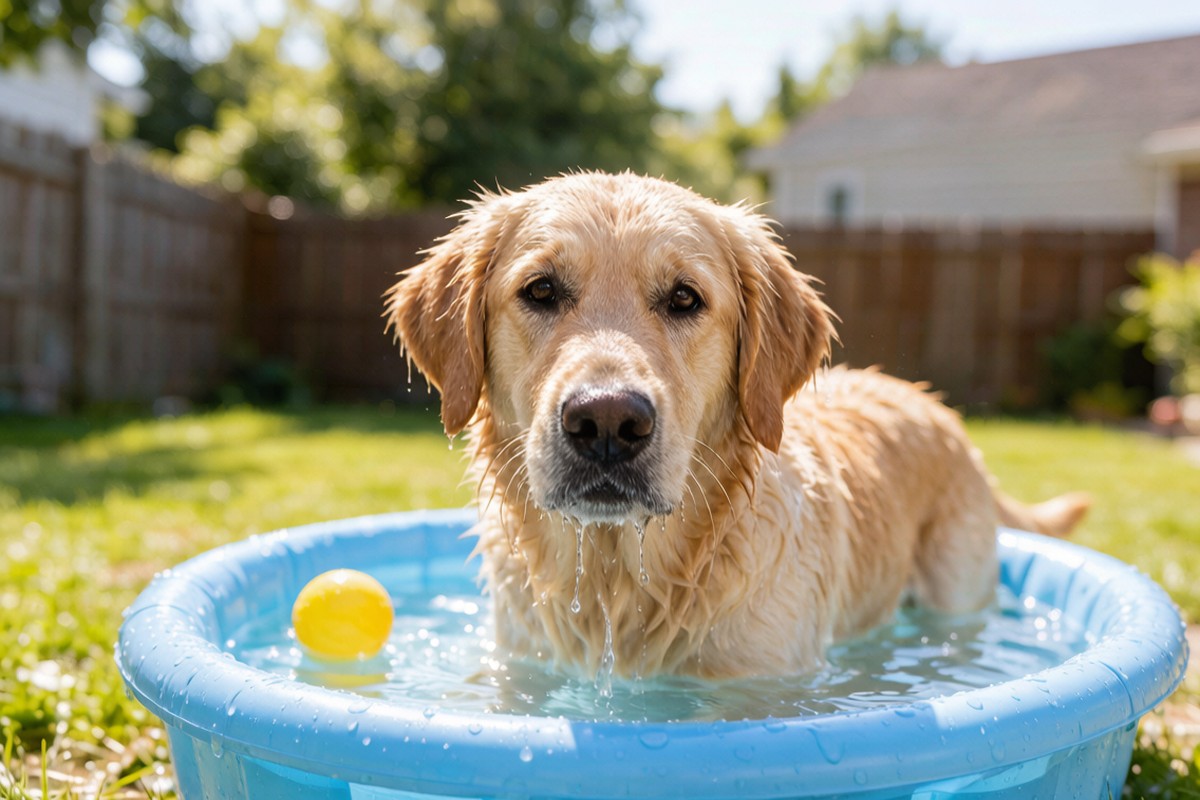
Many dogs love wading in shallow water. A $15 kiddie pool in the shade = hours of safe cooling fun. Supervise at all times.
10 Use Damp Towels for Cooling
Place a damp (not soaking) towel on your pet's neck and chest. The evaporation cools them naturally. Rewet every 30 minutes.
11 Keep Indoor Air Cool
Use A/C or fans. Close curtains during the hottest hours (11 AM - 4 PM) to block direct sunlight. Tile floors are naturally cooler—encourage pets to rest there.
12 Watch for Burned Paw Pads
Hot pavement burns paws in seconds. Check pads regularly. If they look red or your pet limps, apply a pet-safe balm and keep them on grass until healed.
13 Offer Ice Cube Water Games
Drop ice cubes in their water bowl, or make "ice cube treats" by freezing low-sodium broth in ice trays. It hydrates and cools at the same time.
14 Know Your Pet's Risk Level
High-risk pets: senior dogs, puppies, overweight pets, flat-faced breeds, and those with heart/lung disease. Take extra precautions for these guys.
15 Have a Pet First-Aid Kit Ready
Include a digital thermometer, saline solution, and your vet's emergency number. Shop pet first-aid kits on Amazon →
🚑 Emergency First Aid for Heatstroke
If you suspect heatstroke:
- Move the pet to a cool area immediately
- Offer small amounts of cool (not cold) water
- Wet the fur with cool water (focus on belly, paws, and armpits)
- Use a fan to increase evaporation
- Take your pet to the vet immediately—even if they seem better
❓ Frequently Asked Questions
What temperature is too hot for dogs?
Most dogs are at risk when temps exceed 80°F (27°C), especially with high humidity. Brachycephalic breeds should stay indoors when it's over 75°F.
Can cats get heatstroke too?
Yes. Cats are good at finding cool spots, but indoor-only cats in hot apartments are at risk. Provide tile floors, fans, and fresh water at all times.
Should I shave my dog in summer?
No—except for severely matted coats. A dog's coat is like insulation: it keeps them warm in winter AND cool in summer. Shaving removes this protection and risks sunburn.
How do I know if my pet is dehydrated?
Check gum moisture (should be wet, not sticky), skin elasticity (gently pull up skin on back—should snap back instantly), and capillary refill time (gums should return to pink within 2 seconds after pressing).
Are some dog breeds more heat-tolerant?
Yes. Breeds from warm climates (Basenji, Saluki, Afghan Hound) handle heat better. Northern breeds (Husky, Malamute) and flat-faced breeds (Pug, Bulldog, Persian cat) are high-risk in summer.
Related reading: Winter pet care guide | Summer grooming tips | Traveling with pets in summer