Helping an Overweight Dog Lose Weight: A Practical Plan
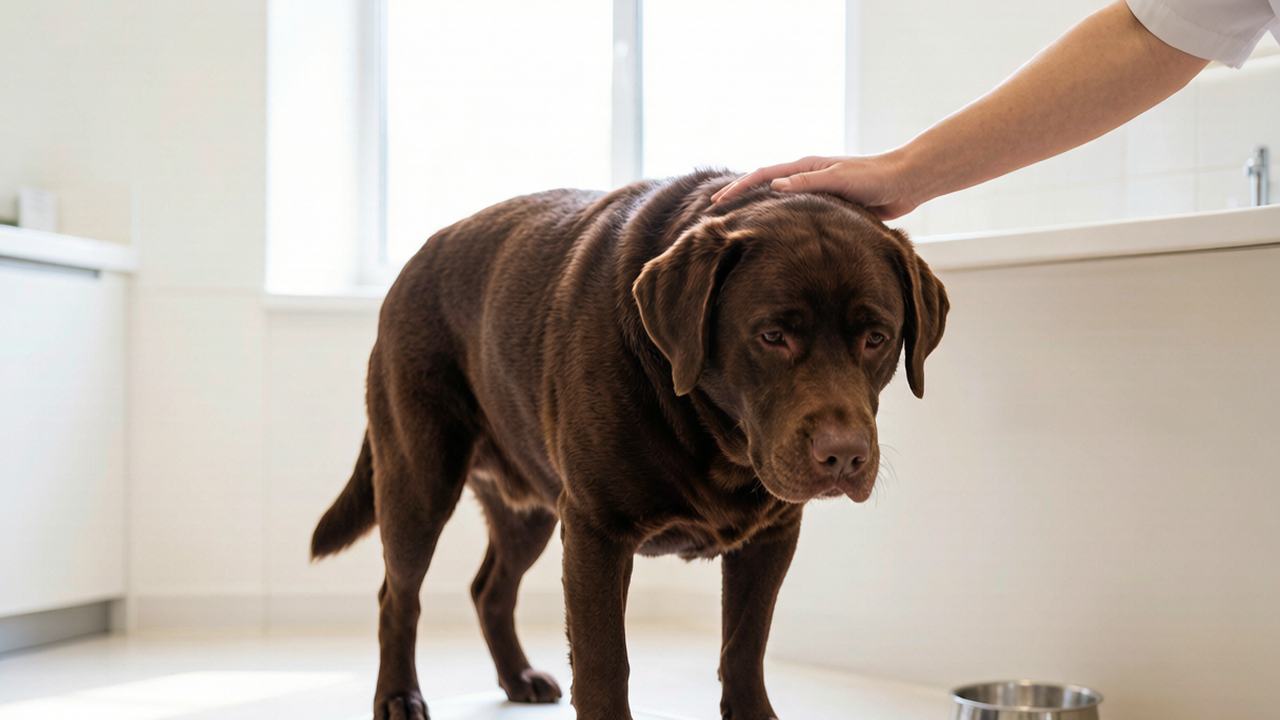
Carrying extra weight is one of the most common — and most preventable — health problems veterinarians see in dogs. It is also easy to miss at home, because the gain happens gradually and the dog still seems happy at mealtimes.
A routine checkup often delivers the first clear number. For a medium-to-large breed such as a Labrador, a healthy adult weight might fall in the 65-to-80-pound range; a reading of 90-plus pounds typically means 15% or more above ideal. That gap matters: excess weight strains joints, strains the heart, and shortens healthy lifespan. [source: AVMA pet owner resources]
The causes are almost always behavioral, not mysterious. A "cup" of food that is really a heaping mug, a steady stream of training treats and table scraps, shorter walks during busy periods, and the metabolic slowdown that follows neutering all add up. Owners are not alone in this: the Association for Pet Obesity Prevention estimates that a majority of U.S. dogs are overweight or obese. [source: AKC nutrition guidance] The sections below lay out a structured, veterinarian-aligned plan for safe reduction.
Step 1: Get Real Numbers, Not a Guess
Start with an actual weight on a veterinary or pet scale, not a bathroom scale while holding the dog. Ask the veterinarian for an honest target weight and a daily calorie budget. A maintenance figure might land near 980 calories per day for a dog at target weight; a reduction plan often targets roughly 20% below that, around 780 calories, depending on the individual. [source: AVMA pet owner resources]
Learn the Body Condition Score (BCS), a 1-9 scale where 1 is emaciated and 9 is obese. At a score of 4-5, you should feel the ribs easily under a thin fat layer — comparable to the back of your hand. A dog scoring 7 or higher, where ribs cannot be felt without pressing, is overweight. That physical check is the real wake-up call.
If a vet visit is not immediate, use a simple at-home test: stand over the dog and look down. A visible waist — an indentation behind the ribcage — should appear. From the side, the belly should tuck up, not run straight across. A dog that looks like a furry coffee table from above is likely overweight.
Step 2: Weigh Food With a Kitchen Scale
This is usually the single most impactful change. Measuring cups are unreliable: studies have shown owners using them routinely over-portion food by a meaningful margin because scoops get "rounded up." A digital kitchen scale removes the guesswork.
Weigh each meal in grams. If a kibble runs about 370 calories per cup and a cup weighs roughly 105 grams, a 780-calorie daily budget equals about 222 grams split across two meals — exactly, with no rounding. [source: AKC nutrition guidance]
Expect an adjustment period. A dog moved from free-choice to a calibrated portion may act starved for the first week or two, finishing in seconds and begging afterward. That behavior reflects habit, not true hunger; the stomach typically adapts within about ten days, and the dramatic performances fade by week three.
Step 3: Do the Treat Math
Treats are where calorie budgets quietly collapse. A typical day can easily include a chew during calls, cheese on a walk, sandwich corners at lunch, training rewards, a stuffed Kong before errands, and dinner scraps — together often 300-plus calories, approaching half of a reduced daily budget. No wonder the scale does not move.
Apply the 10% rule: treats should make up no more than about 10% of daily calories. On a 780-calorie plan, that is roughly 78 calories from treats. Swap high-calorie items for low-calorie options such as baby carrots (about 4 calories each), green beans (about 3 calories per bean), or apple slices with the seeds removed (about 8 calories per slice). Better still, reserve a portion of the daily kibble allocation specifically for training rather than adding separate snacks. [source: FDA animal food & feeds]
Step 4: Exercise for Joint Safety, Not Just Burn
The instinct is to "run the weight off," but an overweight, deconditioned dog should not jump from couch to 5K. Extra load already stresses the joints, and high-impact work risks injury. [source: AVMA pet owner resources]
Favor frequency over intensity: three 15-minute walks spread through the day keep metabolism active and are gentler than one long, strenuous outing. Add a slower weekend "sniff walk" of 30-40 minutes at the dog's own pace; the mental work of sniffing burns energy without impact.
Swimming is ideal — zero-impact, full-body movement that spares the joints. Where natural water is unavailable, many areas offer canine hydrotherapy pools by the session. Only after several months of steady loss and improved fitness should higher-impact play like fetch be added gradually.
Step 5: Slow Feeders and Food Puzzles
Many dogs, Labradors especially, eat a measured meal in under a minute and then act unsatisfied. Stretching the meal helps the dog feel full.
A ridged slow-feeder bowl turns a 45-second meal into several minutes. Food puzzles go further: a Kong Wobbler dispenses kibble as the dog works it, a snuffle mat hides food in fabric strips, and the muffin-tin game covers each cup with a ball to remove. [source: AKC nutrition guidance]
With these tools, meals stretch to 10-15 minutes. The dog works for the food and satiety signals have time to register — the same principle behind advising people to eat slowly.
Step 6: Weekly Weigh-Ins and Adjustments
Weigh on the same scale, at the same time (before breakfast), once a week, and log the result. Consistent data reveals trends that a single glance misses.
A safe canine weight-loss rate is about 1-2% of body weight per week. For a dog starting near 90 pounds, that is roughly 0.9-1.8 pounds weekly. A typical trajectory shows a faster first month — partly water weight and initial adjustment — followed by a steadier 0.8-1 pound per week as the dog approaches goal. [source: AVMA pet owner resources]
If progress stalls for several weeks, revisit the calorie math rather than cutting food drastically; hidden treats and rounding are the usual culprits.
Approaches That Tend to Fail
Several common shortcuts backfire. A "diet" kibble that is mostly filler tends to leave the dog hungry and low on energy; a higher-protein weight-management formula usually keeps the dog fuller and protects lean muscle. Simply feeding less of the regular food without weighing it fails because eyeballed portions drift upward. And jogging an overweight dog too early causes sore paws and lameness — stick to walking, swimming, and low-impact activity until the dog is closer to goal weight. [source: AKC nutrition guidance]
The Principle That Matters Most
Weight is determined far more by what goes in the bowl than by exercise. A 15-minute walk may burn only 30-40 calories for a medium-large dog, while a single chew can cost 100. You cannot out-walk a careless diet — for dogs or people. Food control comes first.
The harder truth: the dog does not experience restriction as a personal betrayal. For a couple of weeks while the stomach adjusts, the dog is simply a little hungrier. It is not sad, deprived, or holding a grudge. The years of healthier, more mobile life that result are worth far more than the brief discomfort of portion control.
What Improvement Looks Like
A dog at a healthy weight is noticeably different from one carrying 15-plus pounds of excess. Energy returns — not frantic puppy energy, but a genuine enthusiasm for walks and play that had quietly faded. Stairs no longer trigger panting, and mobility improves. Veterinarians commonly note better bloodwork, including liver values and joint-inflammation markers, once the excess comes off. [source: AVMA pet owner resources]
The emotional shift for the owner matters too. Restricting food can feel like withholding love, but the genuinely caring act is providing a body that can move through a long, active, pain-free life. A dog that can chase a ball without limping is the better outcome.
This article is for informational purposes only and is not a substitute for professional veterinary advice, diagnosis, or treatment. Always consult a licensed veterinarian if your pet shows signs of illness, injury, or distress. If you believe your pet is experiencing a medical emergency, contact your veterinarian or the nearest emergency animal hospital immediately.
🐾 Enjoyed This Article?
Save it for later, share with a fellow pet parent, or check out more tips on our homepage!
📩 Never Miss a Tip
Get our best pet care hacks delivered straight to your inbox. No spam, unsubscribe anytime.
If You Want a Shortcut on Food Choices
A veterinarian should confirm any weight-management formula before switching. If you'd like to comparison-shop current options and reviews, major retailers carry a range: